

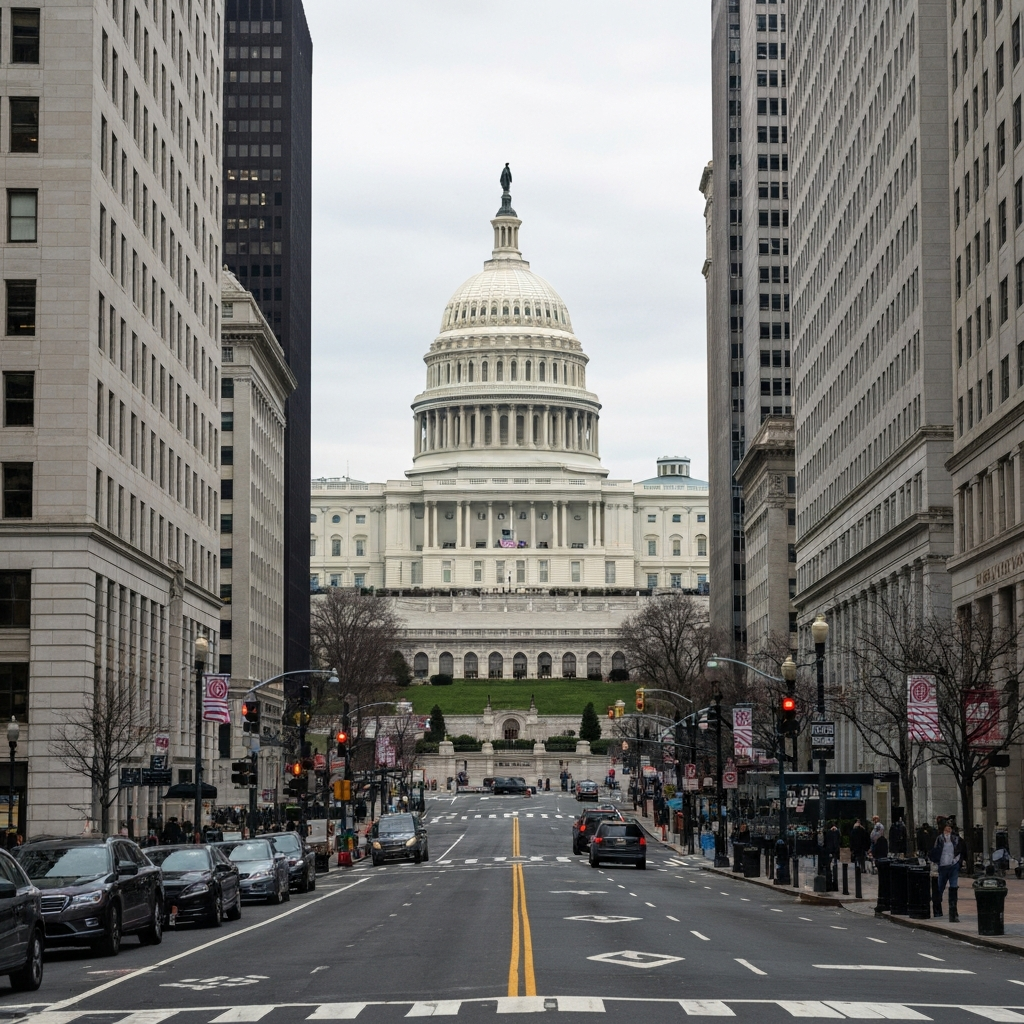
The United States operates under a federal government system, characterized by a separation of powers among three branches: legislative, executive, and judicial. This structure ensures a balance of power and prevents any single entity from gaining excessive control.
Political Structure
The legislative branch, known as Congress, is bicameral, comprising the House of Representatives and the Senate. The executive branch is headed by the President, who serves as both the head of state and government. The judicial branch, led by the Supreme Court, interprets laws and ensures they align with the Constitution. This system of checks and balances is designed to maintain democratic governance and uphold the rule of law.
Economic System
Economically, the U.S. employs a mixed-market system, blending free-market principles with government intervention. This approach allows private enterprises to drive economic activity while the government regulates markets and provides certain public services. Such a system aims to combine market efficiency and innovation with social welfare and stability.
Understanding these foundational aspects of the U.S. political and economic systems provides insight into the country’s governance and economic operations.