

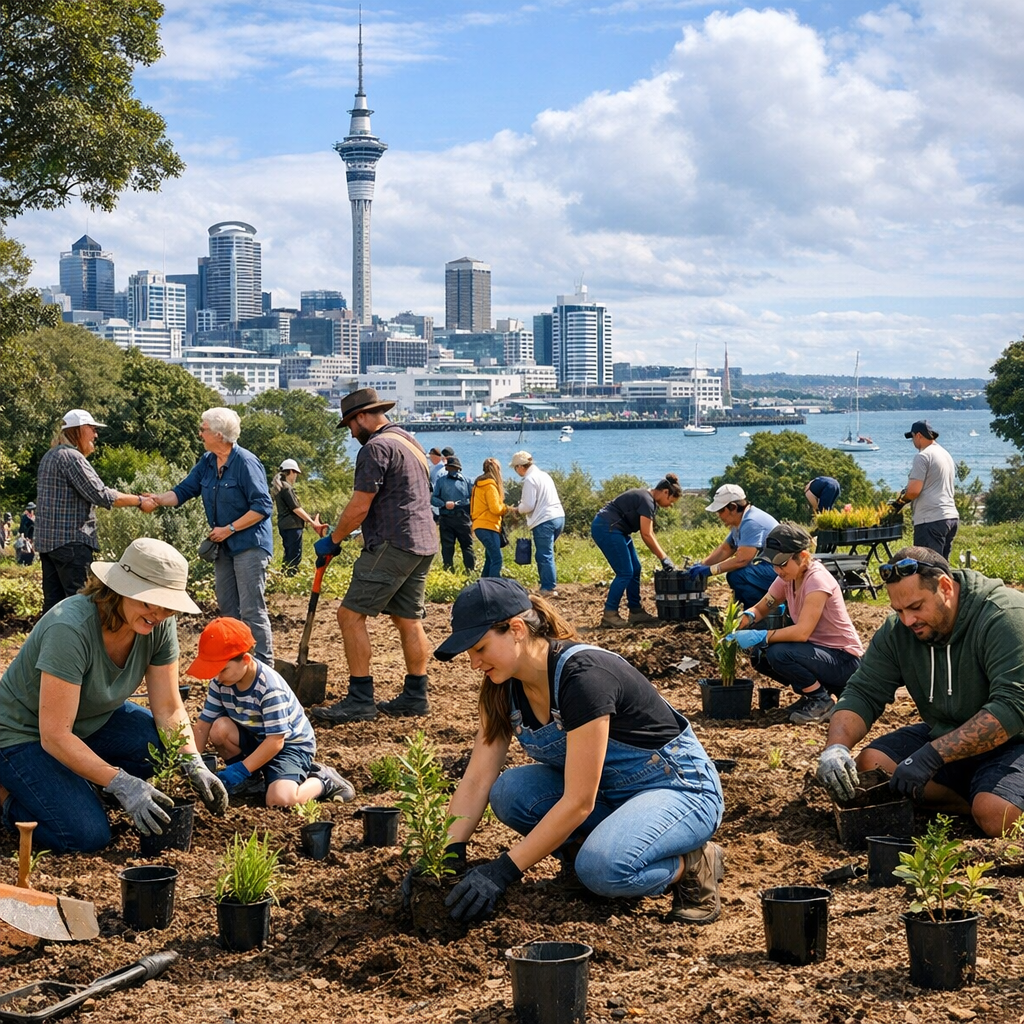
As Auckland faces the realities of a changing climate, local communities are stepping up with innovative adaptation strategies to enhance resilience and sustainability. These grassroots efforts are crucial in addressing the unique challenges posed by climate change in our region.
Understanding Auckland’s Climate Challenges
Over the past century, Auckland’s mean annual temperature has increased by approximately 1.6 degrees Celsius. Projections indicate a further rise of 1.5 to 3.75 degrees Celsius by the end of the century, depending on global emissions reductions. This warming trend is expected to quadruple the number of ‘hot days’—those exceeding 25 degrees Celsius—from 20 to 80 days annually. Additionally, changes in rainfall patterns may lead to more frequent droughts and water shortages. [Source]
Community-Led Adaptation Initiatives
Recognizing these challenges, Aucklanders are engaging in community adaptation planning. This approach involves collaborative efforts to prepare for climate impacts such as heavier rainfall, flooding, rising sea levels, and increased temperatures. By integrating local knowledge with scientific expertise, communities are developing practical solutions that reflect their values and priorities. [Source]
Expanding Green Spaces
One effective strategy is increasing urban greenery. Trees and green spaces can mitigate the urban heat island effect by providing shade and cooling the environment. For instance, replacing hard surfaces with parks and permeable streets can significantly reduce heat retention in urban areas. [Source]
Enhancing Coastal Resilience
Coastal communities are implementing measures to address sea-level rise and coastal erosion. Strategies include restoring natural buffers like wetlands and dunes, which can absorb storm surges and reduce erosion. These efforts not only protect infrastructure but also preserve biodiversity and recreational spaces. [Source]
Promoting Sustainable Water Management
With projections indicating more frequent droughts, sustainable water management is becoming a priority. Rainwater harvesting systems, drought-resistant landscaping, and efficient irrigation practices are being adopted to conserve water resources and ensure availability during dry periods. [Source]
Collaborative Efforts for a Resilient Future
These community-driven initiatives align with Auckland’s broader climate adaptation strategies, as outlined in Te Tāruke-ā-Tāwhiri: Auckland’s Climate Plan. The plan emphasizes the importance of local action in building resilience and adapting to climate change impacts. [Source]
By fostering collaboration and leveraging local knowledge, Auckland communities are not only addressing immediate climate challenges but also setting a precedent for sustainable and resilient urban living.