

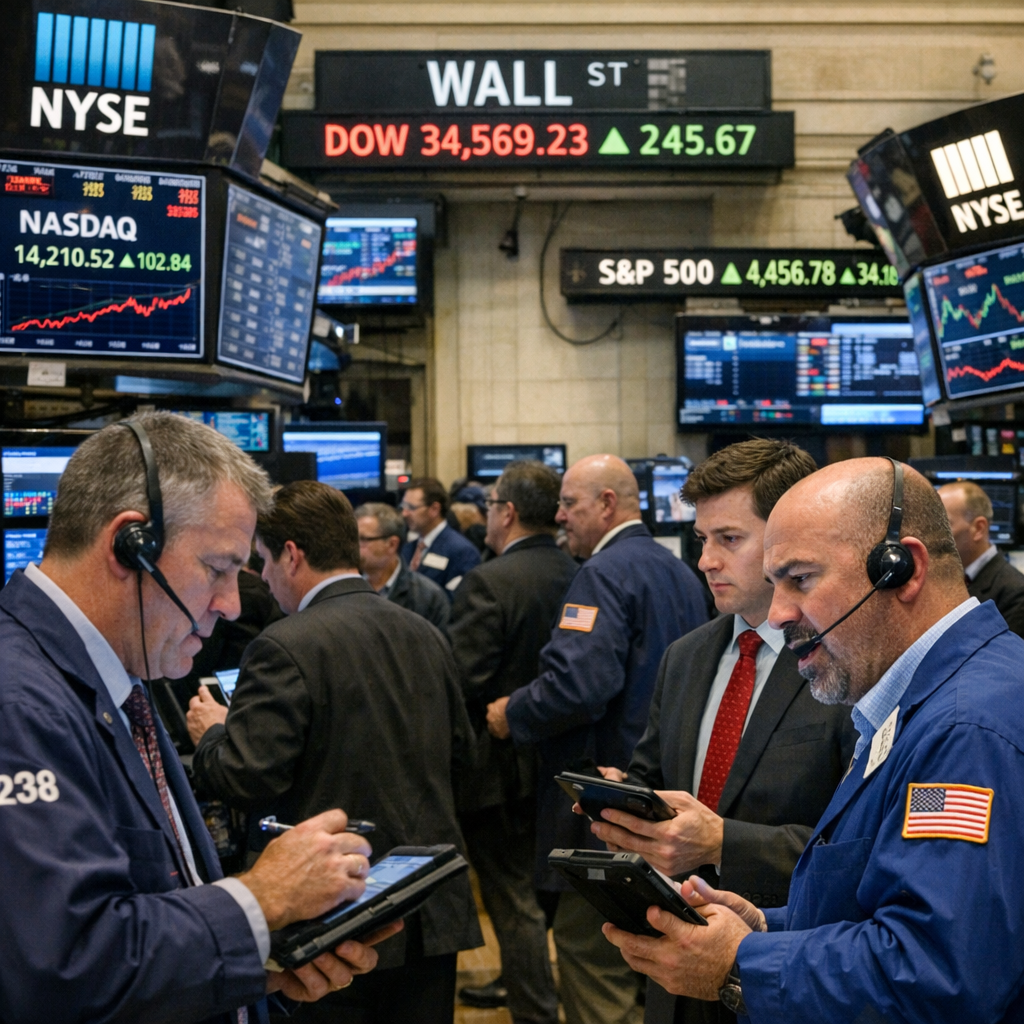
The United States economy has been a focal point of global attention, with recent data offering a mixed picture of its health and trajectory.
Economic Growth and Employment
Recent reports indicate that the U.S. economy expanded at a sluggish 0.7% annual rate in the fourth quarter, reflecting challenges such as the previous government shutdown. Additionally, job gains have been dwindling, with employers posting 6.87 million jobs in March, a slight decrease from 6.92 million in February. This suggests a cooling labor market, which could have broader implications for economic stability.
Inflation and Consumer Prices
Inflation has been a pressing concern, with the key inflation gauge worsening in January, even before the Iran war led to a significant spike in gas prices. The national average gas price rose to $3.61 a gallon, marking the highest level in nearly four years. This surge in energy costs has contributed to overall inflationary pressures, affecting consumer purchasing power.
Public Sentiment and Political Concerns
Public sentiment reflects growing anxiety about the political system. A Gallup poll revealed that about one-third of Americans view politics and government as the nation’s most pressing problem, a concern that surpasses that of most other wealthy democracies. This anxiety is particularly pronounced among older Americans, while younger demographics are more focused on economic challenges like housing affordability.
International Trade and Tariffs
Trade policies continue to influence economic dynamics. President Trump has announced plans to raise tariffs on vehicles from the European Union to 25%, amid ongoing trade disputes. Such measures could have ripple effects on global trade relations and domestic industries.
Looking Ahead
As the U.S. navigates these economic challenges, the interplay between policy decisions, global events, and domestic factors will be crucial in shaping the nation’s economic future. Observers worldwide will be keenly watching how these elements unfold in the coming months.